
Plenty of homeowners in Conshohocken and the surrounding suburbs walk across their original hardwood with decades of wear. And it leads to the same question, over and over: refinish it, or rip it out and start over?
For most of these floors, the answer is simpler than homeowners expect. Solid hardwood can typically be refinished four to six times over its life, and doing so is almost always cheaper than replacing it outright, since the existing material and subfloor are already doing the hard work.
“People are surprised how much life is usually still left in their original floors,” says Norman Chaikin, owner of Norman Carpet & Flooring, who’s spent years walking into homes across the Philadelphia suburbs to make that exact call. “A lot of what looks like damage is really just finish that’s worn down.”
Refinish if: The wood is stable underfoot, there are no exposed nail heads (a telltale sign it’s already been sanded close to its limit), and any gaps or unevenness are minor.
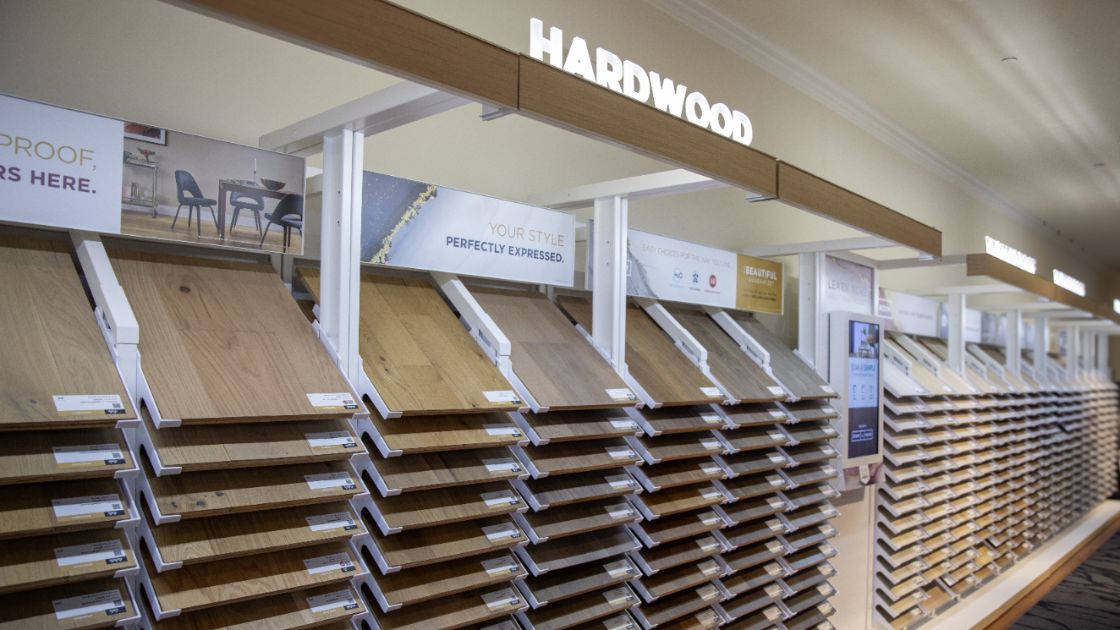
Replace if: Damage or staining runs too deep for sanding to reach, or when there’s rot, long-term warping, or you’re looking for a different design altogether. When replacing, you can pick any color, plank size, and species that works for your space and lifestyle.
Old floors, real value
Hardwood is one of the few features or upgrades that reliably pays back at resale. Buyers consistently favor it over carpet, and in older Pennsylvania homes, uncovering and refinishing the original floor often adds more value than it costs.
Refinishing’s cost advantage follows from the same logic: the subfloor and the material are already in place, so most of what a homeowner is paying for is labor and finish, not new wood. Replacement becomes the better bet once sanding can’t solve the problem, or once a homeowner wants something the existing floor structurally can’t deliver. More often than not, hardwood ages out of style well before it ages out of use.
What refinishing can’t change
Here’s the part homeowners sometimes miss: refinishing works with the wood you already have. Sanding and re-staining can usually shift the color and sheen dramatically, but the plank width and wood species underneath stay exactly what they’ve always been. If you’ve been eyeing wider boards, a different species, or a tone your current floor simply can’t take, that’s a replacement project, not a refinishing one. It’s less about the condition of the floor and more about the look you’re chasing.
Replacement also opens the door to installing unfinished wood and staining it on-site to an exact custom color, rather than choosing from whatever comes prefinished. For homeowners chasing a specific look that off-the-shelf options don’t quite hit, that’s often the more precise route.
When engineered wood makes sense
None of this is a knock on solid hardwood. New solid wood installed today can still be refinished multiple times over the decades ahead, so it’s not giving up future flexibility.
But Pennsylvania’s climate is genuinely hard on wood floors. Humid summers give way to dry, cold winters, and that swing makes wood expand and contract. Solid hardwood, milled from a single piece of timber, feels that shift more than most flooring, sometimes gapping, cupping, or warping in response. Engineered hardwood is built differently: a hardwood top layer bonded over cross-grained plywood, a layered construction that resists that expansion and contraction far better. In older homes without tightly controlled indoor humidity, that stability tends to mean fewer seasonal gaps and less movement over time.
Don’t forget the stairs
Floors aren’t the only original wood taking a beating. Stair treads and railings tend to show wear faster than the surrounding floor, simply from the traffic of feet and hands, and homeowners often overlook them in a flooring project. The options track pretty closely with what’s true for floors: worn treads and railings can often be refinished in place, badly worn treads can be replaced individually without touching the rest of the staircase, or the whole staircase can be replaced with a classic or more modern look. It’s worth asking about at the same time as the floors, since a freshly refinished floor next to a scuffed staircase tends to stand out.
The short version
Can 100-year-old hardwood floors be refinished? In most cases, yes, as long as the wood hasn’t suffered water damage, rot, or structural issues.
Refinish or replace, cost-wise? Refinishing is almost always cheaper. Replacement earns its price tag when sanding can’t fix the damage, or when a homeowner wants a different wood, width, or finish than what’s already installed.
Who handles this near Conshohocken, Ambler, or Glenside? Norman Carpet & Flooring, in Conshohocken and Bryn Mawr, installs and refinishes hardwood throughout the greater Philadelphia region.
How do you know if it’s time to call someone? Visible nail heads, deep gouges, soft spots, warping, or just genuine uncertainty about what’s under the finish are all good reasons for an in-person look.

Norman Carpet & Flooring
550 Brook Rd, Conshohocken, PA 19428
Norman Carpet & Flooring
574 W Lancaster Ave, Bryn Mawr, PA 19010
Visit normancarpetandflooring.com